Sunday, August 4, 2013

What to Eat when Traveling

Learn what food to eat while you are traveling.

BREAKFAST
At Starbucks, skip the Apple Fritter (it contains almost half a day’s worth of saturated fat) in favor of the Protein Artisan Snack Plate. In Cooking Light last summer, dietitian Karen Ansel called a combo of fruit, peanut butter, a hard-boiled egg, and a mini bagel a “perfect balance,” nutritionally speaking; the recent substitution of multigrain bread for the bagel can’t hurt (but go easy on the new honey peanut butter). At Dunkin’ Donuts, try the 150-calorie Egg White Veggie Wake-Up Wrap.

LUNCH
Craving a burger? Back away from McDonald’s 790-calorie Angus Bacon & Cheese. McD’s hamburger, at 250 calories, is “one of the diet-friendliest sandwiches in the biz,” said dietitian H. K. Jones in Fitness, though it’s so light, you may want to add a side salad with Newman’s Own low-fat balsamic vinaigrette. Dietitian Elaine Magee at WebMD suggests the “surprisingly tasty” veggie burger at Burger King.

DINNER
At 340 calories and 9 grams of fat, two slices of Pizza Hut’s 12″ Fit ’N Delicious pizza with diced chicken, red onion, and green pepper is “a dietitian’s dream,” Jones said.


Eat Prunes and Build Better Bones

Prunes are the most bone-friendly fruit. Find out how many you need to combat bone loss.

Talk about an image makeover. First prunes got a new name (they’re dried plums, if you please), and now it seems they offer a previously unrecognized benefit: They’re good for your bones. In fact, says nutrition researcher Bahram H. Arjmandi, RD, at Florida State University, midlife women who ate ten prunes daily for a year slowed their bone loss substantially. If ten sounds daunting, even three a day can make a difference, says Arjmandi, who adds that prunes are the most bone-friendly fruit he’s seen in decades of study. Since women can lose up to 20 percent of their bone mass in the seven years after menopause, that’s good news.

It’s especially welcome because hopes for a different natural fix were recently dashed. Soy supplements did nothing for bones in menopausal women who took a hefty dose for two years. (The supplements didn't cool hot flashes either.) So eat tofu if you like it, but for your bones’ sake, start snacking on prunes. Unless the thought makes you feel old. In that case, have some dried plums.

Live longer, Feel better, Lose weight with Dairy

Live longer, feel better, lose weight: Dairy has some powerful health benefits! Read on for surprising facts from the cow barn that will get you moo-ving straight to the dairy aisles.

You can prevent tooth decay by eating cheese after a meal.


In Harold McGee's book On Food and Cooking, he explains that  eating cheese prevents acid secretions from clinging to your teeth: "Calcium and phosphate from the cheese diffuse into the bacterial colonies and blunt the acid rise." Follow the French's lead and treat yourself to a small cheese and fruit platter after dinner.

You can make feta healthier.

This herbaceous, salty, flavorful cheese (which is packed in salted water) can be soaked in water for a few minutes and rinsed thoroughly, before tossing into salads or adding to pastas, to reduce sodium levels dramatically without really changing the flavor.

Eating dairy helps with sleeplessness.

For those suffering symptoms of insomnia, a protein naturally occurring in milk may improve sleep quality and next-day alertness. Additionally, tryptophan which raises levels of serotonin and melatonin, both of which aid in catching a good night's sleep. Unlike turkey (also rich in tryptophan) which leaves you with a groggy, heavy feeling, an added benefit of having milk, cheese, or yogurt is they are easier on your stomach and rich in calcium, which promotes transforming tryptophan into calming melatonin.

You can eat cheese even if you're lactose intolerant.

Aged cheeses (like Asiago, Parmesan and bleu cheese) contain little or no lactose. So even people with lactose intolerance should be able to eat aged cheeses since all the lactose (milk sugar) has been converted by bacteria to lactic acid. Additionally, all natural cheeses are very low in lactose. Most of the lactose is removed when the curds are separated from the whey when making cheese, so these shouldn't pose any issues as well.

Weird Silver Cleaning Tricks

Make your tarnished silver and dull jewelry shine like new after a cleaning with these common household items.


Laundry detergent

To make your jewelry or silverware sparkle, line a medium-sized bowl with aluminum foil and fill it with hot water. Mix in one tablespoon of powdered laundry detergent, then soak your silver for one minute. Rinse with clean water, and air-dry.

Vinegar

Return luster and shine to your silverware and jewelry by soaking it in 1/2 cup white vinegar mixed with 2 tablespoons of baking soda for two to three hours. Rinse under cold water, and dry thoroughly.

Lemon-lime soda

Recapture shine by dunking your silver items in a bowl of lemon-lime soda for one hour. Rinse and dry thoroughly.

Toothpaste

Squeeze a small amount of toothpaste on a rag and polish your silver. Then rinse—and see how it shines!

Chalk

Silverware will stay shiny if you keep a few pieces of chalk in the drawer or chest where you store it. The chalk absorbs moisture, preventing your nice utensils from tarnishing.


Saturday, August 3, 2013

Airplane Food Trend

Is airplane food making you feel like you’re at “a 7-Eleven in the sky?” When 9/11 crippled the airline industry many airlines stopped serving free food to save money. What has sprung up in the ensuing decade is a veritable flying convenience store, and healthy is not really on the menu, reports the Wall Street Journal. Or is it?


Northwest Airlines’ best seller is a reheated quarter-pound burger, says WSJ.com. However, Delta (which owns Northwest) also offers the Delta’s Eat menu on some flights. The menu has two snack boxes, one with a convenience store assortment of crackers, spreads, and chocolate and the other with The Gracious Gourmet Mediterranean Vegetable Spread, organic Dr. Kracker Snackers, and other healthier sounding goodies.

United and Continental (which merged in 2011) offer 3 different snack boxes varying in health value, with the most popular being a convenience store goodie bag of goldfish crackers, jelly beans, salami, chips, and cookies. They also have a healthier Tapas box with hummus, gourmet crackers, and natural almonds. Sadly their organic snack box is no longer offered. United and Continental serve the exact same inflight snacks and meals within the U.S. (except for an angus cheeseburger that Continental serves exclusively).

JetBlue offers four different snack boxes that appeal to your mood and fitness goals. Do you want to Beef Up, Cheer Up, Shape Up, or Power Up?  Some highlights here are Brothers All Natural Fuji Apple Fruit Crisps and Emerald Natural Almonds.

Alaska Airlines has Picnic Packs which offer a tapas blend, a traditional picnic spread, and one that claims to be good for the heart.

Despite the popularity of the microwaved burger, the trend appears to be shelf-stable foods with healthier options available. Gourmet brands like Jelly Belly, Kettle Chips, and Pepperidge Farms are jumping on board alongside some trendy all-natural foods like Brothers All Natural fruit crisps and other items more at home in a Whole Foods than a 7-Eleven. While these boxes have a convenience store feel, and people still love burgers and salami and cheese, frequent fliers can at least eat healthy on some flights, if they want to. Things may be looking up.


Not so Bad Foods

Microwaved foods

The miracle of the 1980s, the microwave has gotten some bad press for destroying nutrients, but some studies show microwaving broccoli can preserve up to 80 percent of its vitamin C. While microwaving your vegetables seems like a quick way to get your veggies and preserve nutrients, you should skip the bagged microwaved popcorn. Some studies have shown that the lining could have potential cancer-causing effects.

Fat

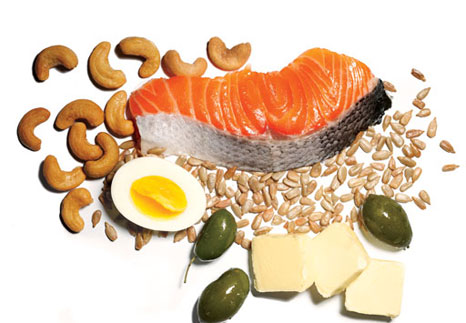
The human body was designed to love fatty foods in part because of the needs of the brain. We should choose the “good” kinds of fats, skipping the dangerous ones and adding plenty of brain-healthy ones. The brain is made mostly of fat. Fat forms the membranes around cells and also insulates the bundles of nerve fibers that act as high-speed communication cables in the brain. It shouldn't be too shocking, then, to learn that fat is the single most important nutrient for protecting and preserving brain function. Eating a low-fat or, worse, a no-fat diet is actually the worst thing you can do for your brain. What the brain craves most are the omega-3 fats. They turn on the genes that determine how the brain develops, repair and preserve brain cells, enable the cells to deliver signals efficiently, and may even facilitate the growth of new cells. Studies show that without enough omega-3s, the brain can't function properly. Over time, lack of omega-3s may even contribute to the development of Alzheimer's disease. Unfortunately, most people don't eat nearly enough of these good fats. 

Processed cheese

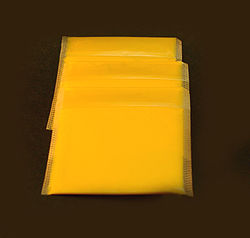
According to an article in Discovery Magazine, in some cases processed cheese may actually be preferable to "real" cheese. Have you ever looked at the ingredient list of your typical supermarket cheese and seen the word "natural enzymes?" Those enzymes are collectively called rennet, which comes from a calf's stomach. Rennet causes the caseins in milk to clump and form curds, which are then pressed and aged by bacteria. However, when cheese made by this process is melted it separates and becomes oily (scientists discovered how to partially reverse that process by adding in sodium citrate). But processed cheese bypasses the bacteria-driven process entirely, resulting in an altered structure that melts smoothly. In the end, so-called processed cheese is really mainly just, well, cheese.

Artificial flavor

Both natural and artificial flavors are actually made in laboratories. But natural flavorings are isolated from a natural source, whereas artificial flavorings are not. However, natural flavors are not necessarily healthier than artificial. According to Scientific American, the natural flavor of coconut is not from an actual coconut, as one might expect, but from the bark of a tree in Malaysia. The process of extracting the bark kills the tree and drives up the price of the product when an artificial flavoring could be made more cheaply and more safely in a laboratory. That natural strawberry flavor you love? It could be made from a "natural" bacterial protein. Mmmm!

Sugar

We aren't saying sugar should be consumed willy nilly, but real sugar can be a better choice than artificial sweeteners. Eating too much artificial sweetener could cause the body to lose its ability to naturally gauge the amount of calories coming in. Essentially, that Diet Coke will make your body say yes to a second brownie. The body responds to natural sugar by secreting insulin, telling your body that sugar has been consumed.

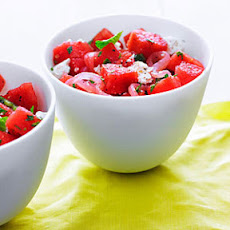
Fresh Organic Watermelon Salad

For this recipe adapted from Woman’s Day magazine, you can use either red melon or yellow melon or a combination of both.

There are many ways that you can play around with this recipe. Instead of organic mint leaves, you can also use basil leaves, which has a nice minty and subtly sweet flavor that goes well with the watermelon and feta cheese. Oregano also works well with this recipe. You can also use a mixture of oregano, basil and mint for more texture, flavor and aroma. While feta cheese is the best kind of cheese for use in this recipe because of its texture and flavor, you can also use other kinds of goat’s cheese, Gorgonzola, or blue cheese. You can also top the watermelon salad with pistachios, walnuts, almonds, or pecans for a bit of a crunch.

A creative way to serve and present watermelon salad is inside the rind of the watermelon. To do this, slice the watermelon lengthwise in half. Scoop out the watermelon with a melon-baller or with a spoon, making consistent and neat round shapes from the flesh of the watermelon and hollowing out the inside and leaving the rind for later use. You can use large watermelons for a centerpiece in a buffet or use smaller sized watermelons for personalized salad for each person. Once you’re done tossing the salad, place it back in the rind. You can trim the bottom half of the watermelon “bowl” to make sure that it is steady on the surface and stays in place when you serve it.

Ingredients:
4 cups fresh seedless organic watermelon, diced and chilled (can use either red or yellow melon or a combination of both)
1 cup organic feta cheese, diced
1/2 cup fresh, organic mint leaves, shredded
2 tbsp. virgin olive oil
Freshly ground black pepper, to taste

Directions:
 1. In a large serving bowl, combine all ingredients. Toss lightly to mix.
 2. Place in refrigerator and allow to chill for at least 1 hour. Serve chilled.